In memory
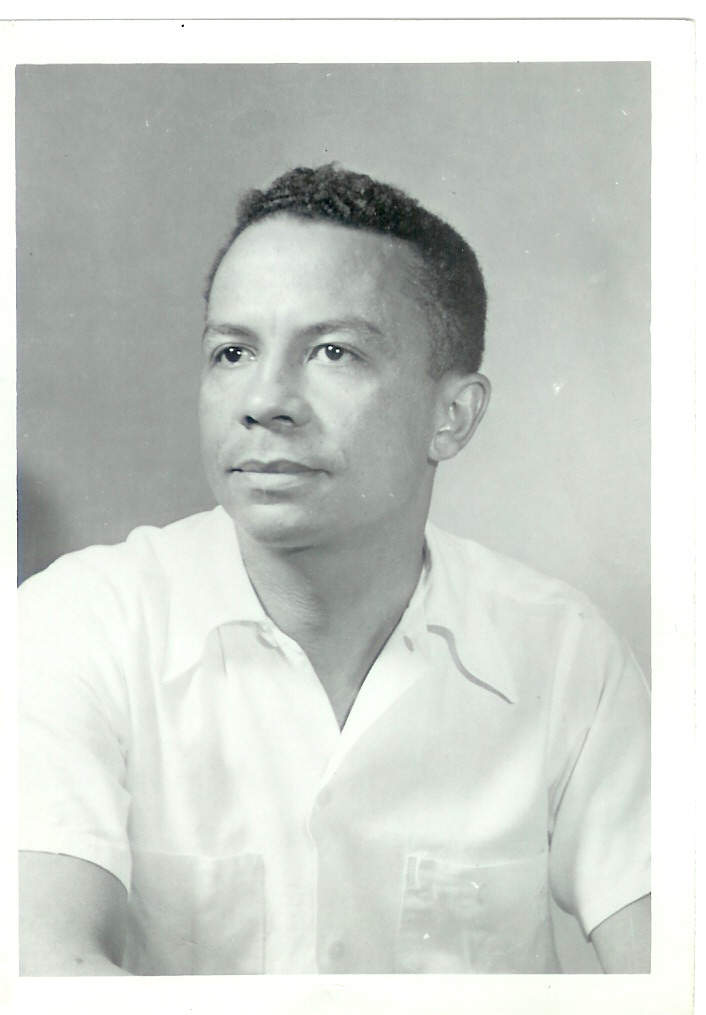
Dr. Gordon Alexander Rodgers Jr.
“Doc” · Anniston, Alabama
to
Dentist. President of the Anniston branch of the NAACP and of its Alabama State Conference. The first Black member of the Anniston City Council.
“I would gladly do them all over again.”
In his own voice · April 12, 1995
“I mean, after fifty-five and sixty years of doing something, so many things have come through your mind, and your body is focused on things that — you have to scratch your head to come up with some facts, and some things you just forget. But they’re all pleasant, and I would gladly do them all over again.”
Hear it in context in the full interviewAll recordings
Alabama Oral History No. 93, Tape 4 of 4, 10:40–11:11. Interview by Shaun Simmons for Dr. Suzanne Marshall’s oral history project, April 12, 1995. Courtesy of Jacksonville State University, Houston Cole Library. View the original
A dentist who pushed a town toward justice
Gordon Alexander Rodgers Jr. was born in Anniston, Alabama, on October 28, 1915, the son of Dr. Gordon A. Rodgers Sr., a Meharry-trained physician from Wetumpka, and Fannie Lewis Rodgers. Black principals in Anniston added to their school one grade at a time so that he and his classmates could keep studying. He graduated from Talladega College in 1937 and from Meharry’s dental school in 1941, then served in World War II as a dentist with the 92nd Infantry Division, the “Buffalo Soldiers,” in Italy.
After the war he came home and opened a dental office in Anniston. He never really stopped being “Doc.” From about 1948 he led the Anniston branch of the NAACP, and he later served as president of the NAACP’s Alabama State Conference. By his own account that work included the first statewide voter-registration drive. In 1956 Attorney General John Patterson won an injunction that shut the NAACP down across Alabama for years.
He kept going. In about 1962 he ran for public safety commissioner in a city where the Klan was active. He lost. One later account says he had called for a biracial committee of Black and white community leaders, and the city created one the following year. In 1968 he became the first Black member of the Anniston City Council and served two terms.
He and his wife, Agnes Durrah Rodgers, raised four children in the family home on Claxton Street. In later life he turned to astronomy, photography and his garden, and he kept urging people to register and vote. He died in Douglasville, Georgia, in 2007, at 92. This site gathers what is known of his life, in his own words wherever possible, with every source credited.
Explore
- BiographyHis LifeEight chapters from his father’s Wetumpka roots to the council chamber, footnoted to the sources.
- Oral historiesHis VoiceTwo recorded interviews, 1995 and 2002, with transcripts that follow along as he speaks.
- MapHis AnnistonThe places in his story, from Cooper Avenue and Claxton Street to West 15th Street and City Hall.
Also: the timeline, the family, documents and clippings, and sources and credits.
In his words
“…once a dentist, always a dentist. I came back from World War Two and opened a dental office here in Anniston, Alabama, in nineteen forty-seven or forty-eight, one or the other. And I've been here since.”
Listen · 1995, Tape 1 of 4, 10:41Jacksonville State University, Houston Cole Library. Original: Alabama Oral History No. 93: Dr. Gordon A. Rodgers Jr. “So it's a matter of getting everybody — making everybody want to vote and realize the value of voting, and it starts from there.”
Listen · 1995, Tape 2 of 4, 13:33Jacksonville State University, Houston Cole Library. Original: Alabama Oral History No. 93: Dr. Gordon A. Rodgers Jr. “And you don't get discouraged if you see behavior which is not productive of achieving our goals. Get up the next morning and try again.”
Listen · 1995, Tape 3 of 4, 2:17Jacksonville State University, Houston Cole Library. Original: Alabama Oral History No. 93: Dr. Gordon A. Rodgers Jr. “I'm almost eighty, and sixty years of my life was spent under one hundred percent Jim Crow laws — down to the drinking fountain.”
Listen · 1995, Tape 3 of 4, 12:47Jacksonville State University, Houston Cole Library. Original: Alabama Oral History No. 93: Dr. Gordon A. Rodgers Jr.
Share a memory
Did you know Doc Rodgers?
For decades he cared for patients in Anniston, led the local NAACP, urged his neighbors to register and vote, and served on the city council. If you were his patient, his neighbor, a fellow NAACP member or family, your memory belongs here. So do photographs, letters and corrections. The family reads every submission before it appears on the site.